
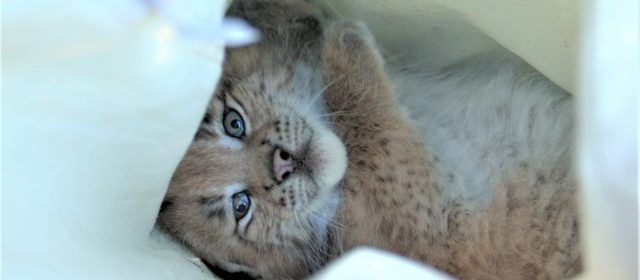
June is the season of denning. Female lynx usually give birth at the end of May and spend at least two months with the cubs at the denning site, moving them from den to den. In case of Aida, telemetry data was showing us that she was staying confined to a small area since mid-May, indicating potential denning. Causing minimum possible disturbance, we visited the area and confirmed Aida gave birth to three kittens. The kittens were all...
Read More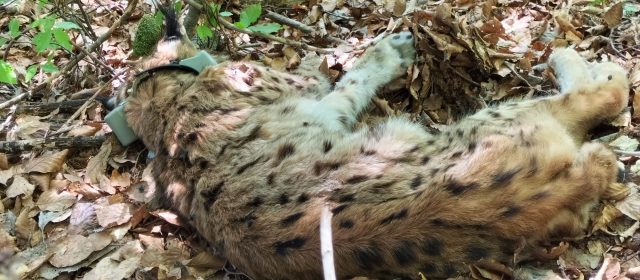
In the beginning of May, we received a mortality signal from the telemetry collar of lynx Igi, a resident Slovenian lynx that we monitored with telemetry since February this year. We immediately visited the last locations sent by the collar and found Igi’s carcass, showing severe loss of weight but no visible injuries. The carcass was taken to the Veterinary Faculty, University of Ljubljana, for examination and autopsy to...
Read More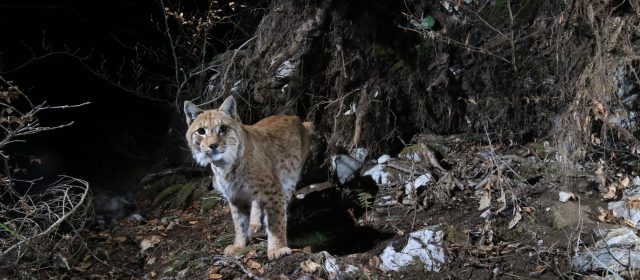
Three years ago, on May 14, Goru, the first lynx captured within the LIFE Lynx project, was released in Slovenia, becoming the first lynx included in the Dinaric SE-Alpine lynx population since 1973. Thanks to two successful GPS collar deployments, we’ve been monitoring Goru’s movements since his release in 2019. This provided us an incredible amount of data, from which we obtained crucial information about his role in the population,...
Read More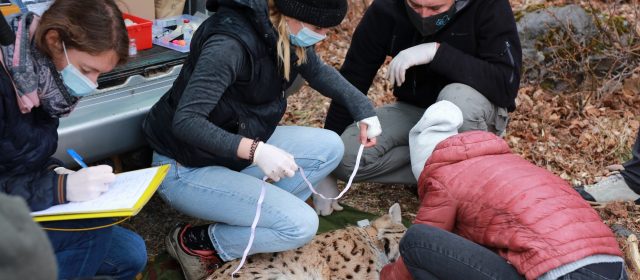
On Wednesday, March 30, Croatian LIFE Lynx team managed to capture and successfully fit with a collar another lynx in the Lika region, Croatia. The adult remnant male weighed 24 kg and we estimated him to be around 5 years old. We have already known him since 2019 from camera traps set in PP Velebit and nicknamed him Pandora. Pandora is also holding the record as the most photographed lynx on Velebit as we have more than 60 recorded...
Read More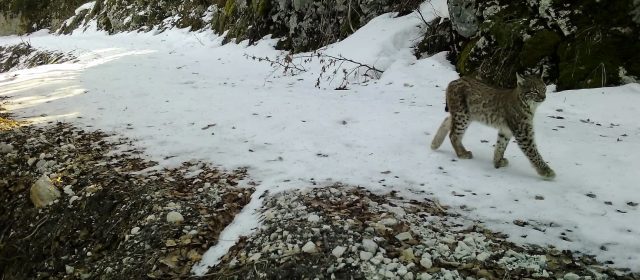
Aida’s kittens were the first confirmed lynx reproduction in Gorenjska region the scope of the LIFE Lynx project. Aida was released into Jelovica forests together with male lynx Zois in April 2021. Just four months later, lucky hikers stumbled upon about a month old lynx kittens. Since then we regularly got some hints that the kittens are with their mother, but now we got proof that at least one of them survived the winter. A...
Read More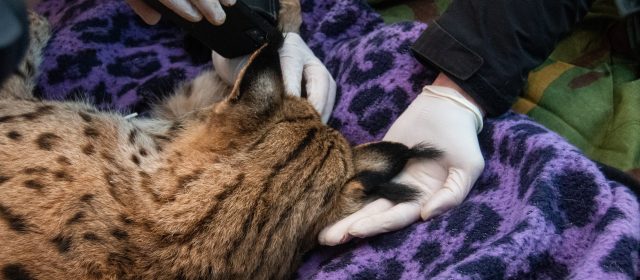
Last week, Slovenian LIFE Lynx project team managed to equip another two lynxes with new telemetry collars in Slovenian Dinaric Mountains. One of them was lynx Catalin, who was translocated from Romania and released in Snežnik forests back in 2020. He was already equipped with a collar but batteries on it would drain soon, therefore we replaced it with a new collar, which will enable us to prolong tracking of his movements and...
Read More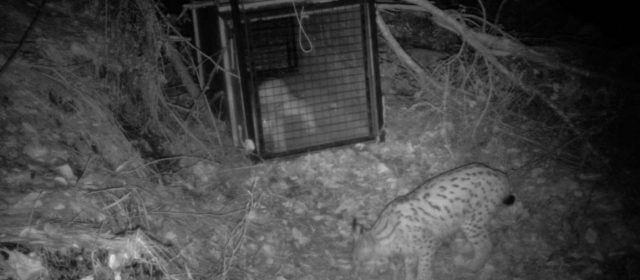
On Sunday, February 13, 2022 in the morning, biologists from the Biotechnical Faculty received an alarm about a triggered trap in the area of Mala Gora near Ribnica. With the help of a GSM camera trap, they saw that they captured a juvenile lynx. Later on, they discovered that it is a young female l, approximately 9 months old and weighing 12 kg. Most probably, it is one of the three last-years cubs of the resident female lynx Teja...
Read More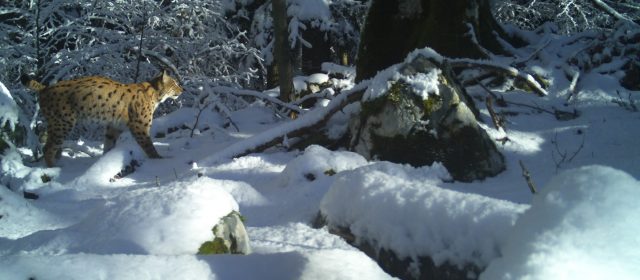
One of the main challenges of surveying lynx with camera traps is to find locations for camera traps where the chance of recording lynx is highest. Camera traps are thus often set at forest roads, which are often used by lynx, however our experience from the Dinarics shows that setting up cameras at prominent rocks, scent-marking sites or mountain ridges also provides good lynx records. In the scope of an internship at the Slovenia...
Read More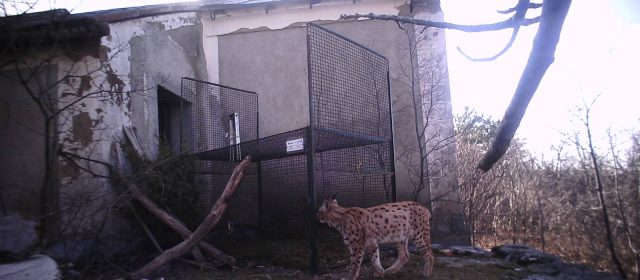
On February 4, 2022, LIFE Lynx project managed to capture not one, but two lynxes from the remnant population in Dinaric Mountains. In Nature Nark Velebit, Croatian team captured an adult male named Josip. He is a big male who weighed 27 kg and we estimate him to be around 5 years old. He is present on our camera traps in the Nature Park since December 2019, and now we will gain a better insight into his life with the help of the...
Read More
We are closely monitoring all translocated lynxes with the help of telemetry collars. However, sometimes the equipment does not work as it is supposed to. In December, we noticed, that the batteries of telemetry collars of Tris and Lenka, two lynxes translocated to the Alpine region, are losing power and later on stopped working. The last data we have received from their collars were in the middle of December. Tris and Lenka share a...
Read More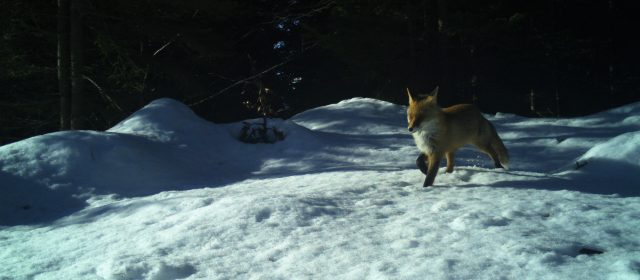
This season, we have extended the monitoring of the impact of lynx population reinforcement in Slovenia to the Slovenian Alps. In the spring, five adult lynxes equipped with telemetry collars were released in the area of Pokljuka and Jelovica. Despite telemetry monitoring, we are regularly monitoring the progress of the reinforcement with camera traps, which are the main tool for lynx monitoring, as they allow long-term monitoring of...
Read More