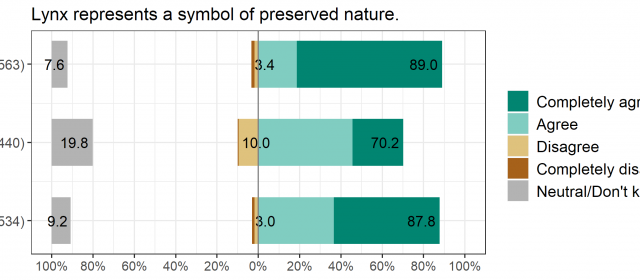
Understanding the attitudes of stakeholder groups is crucial in conservation of large carnivores. With the public attitude survey we’ve targeted the main stakeholder groups which are either crucial for lynx conservation or which livelihoods lynx presence can impact – general public, hunters and livestock breeders all coming from the project area. The questionnaire we used included questions on attitudes towards lynx, beliefs about...
Read More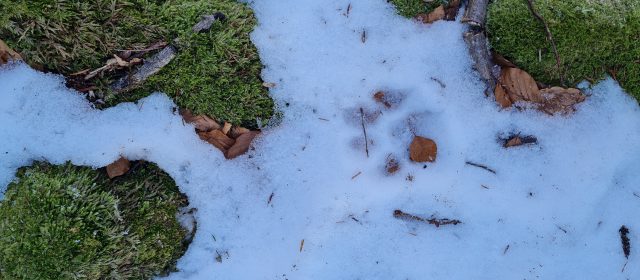
We are closely monitoring all translocated lynxes with the help of telemetry collars. However, sometimes the equipment does not work as it is supposed to. In December, we noticed, that the batteries of telemetry collars of Tris and Lenka, two lynxes translocated to the Alpine region, are losing power and later on stopped working. The last data we have received from their collars were in the middle of December. Tris and Lenka share a...
Read More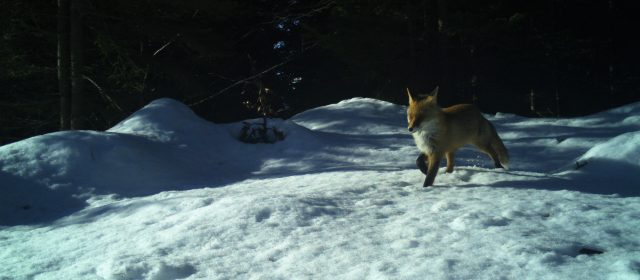
This season, we have extended the monitoring of the impact of lynx population reinforcement in Slovenia to the Slovenian Alps. In the spring, five adult lynxes equipped with telemetry collars were released in the area of Pokljuka and Jelovica. Despite telemetry monitoring, we are regularly monitoring the progress of the reinforcement with camera traps, which are the main tool for lynx monitoring, as they allow long-term monitoring of...
Read More
The recently published study Dolines and Cats: Remote Detection of Karst Depressions and Their Application to Study Wild Felid Ecology, is one of the first that primarily relies on remote sensing data to detect microhabitat characteristics on a large scale. It is also a good example of interdisciplinary collaboration between bio- and geo-scientists, where the authors demonstrated the applicability of automatic methods for remote...
Read More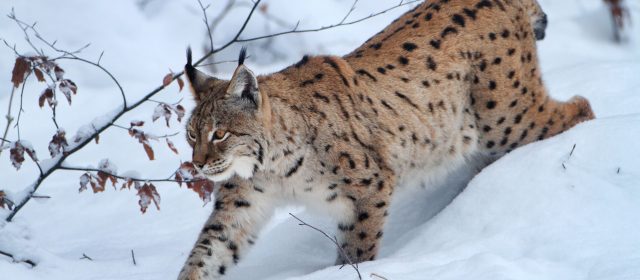
A recent study, part of a large collaborative network, evaluated habitat selection of Eurasian lynx across continental Europe and discovered interesting patterns across different populations and spatial scales. The study included data from the Dinaric Mountains and was co-authored by researchers from LIFE Lynx team. Eurasian lynx is a largest felid in Europe, with ability to persist in human-dominated landscapes. Therefore, studying...
Read More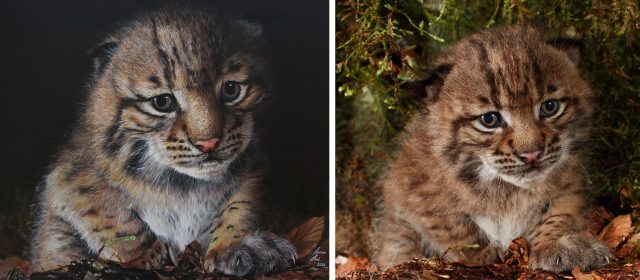
An exhibition of art works by the young painter Klarisa Sipoš will be on view at the Gallery Fortunata Berganta from January 24, 2022. Klarisa is one of the few artists of photorealism in Slovenia. Photorealism uses photography as a reference for a photorealistic painting. Klarisa has been inspired by the lynx throughout her painting career. Among other things, she found inspiration in one of the photographs of lynx, taken by...
Read More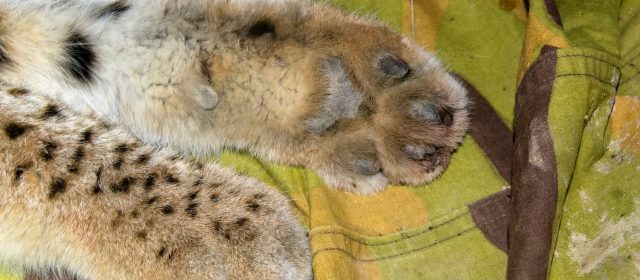
On Tuesday, January 18, 2022, the LIFE Lynx project team, led by a research team from the Biotechnical Faculty, Department of Forestry and Renewable Forest Resources, University of Ljubljana, and Ljubljana ZOO successfully captured a young lynx in the Goteniška gora area in the Kočevje region. It is one of last year’s four kittens of the female lynx Petra, which we have been monitoring with a telemetry collar since March 2021....
Read More
Inbreeding is the biggest threat to the Dinaric-SE Alpine lynx population so we monitor the population status also through genetic analyses. Genetic samples of lynx were being collected between May 2020 and April 2021. Altogether 149 genetic samples were collected in Slovenian and Croatian Dinarics and SE Alps (Italy). Most of the samples were hairs, followed by scats and urine. Each sample has a label, from which we get the recorded...
Read More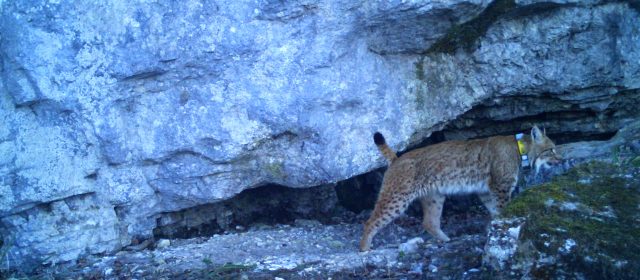
We have prepared a second report on the surveillance of lynx reinforcements in Slovenia and Croatia. Using different monitoring methods, we recorded 95 adult lynx in the Slovenian and Croatian Dinarides during the 2020/2021 season. Five lynxes have their territories in the Slovenian Alps. With the help of 76 hunters, we monitored lynx over a 4000 km2 area in Slovenia with more than 200 camera traps. We found that 24 adult lynxes were...
Read More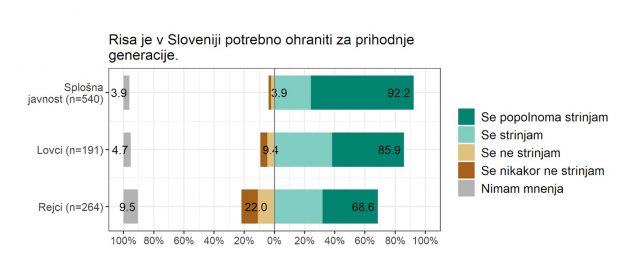
The existence of large carnivores depends to a large extent on successful coexistence with humans, so knowledge of stakeholder attitudes is of great importance for the conservation of large carnivores. Therefore, a public opinion survey among local residents, hunters and breeders was carried out at the start of the LIFE Lynx project and was repeated again in 2021. We were mostly interested to know more about the stakeholders’...
Read More
After Ludvík Kunc left us forever last year, his friend and exceptional man, a lynx expert Štefan Zatroch, passed away in the beginning of this year as well. Jakub Kubala, from the Slovak LIFE Lynx project team remembers Mr. Zatroch with these words: It was a great honor for me that we have become a part of his exceptional life story (very nicely documented in a documentary film Hunters stories – The lynx Catchers His efforts and work...
Read More