
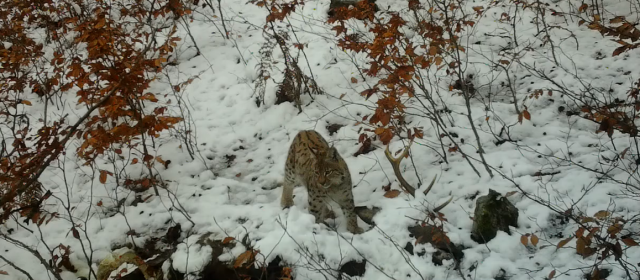
Lynx Niko, one of last year’s offspring of Goru and Teja, left his mother’s territory in December and began his journey to independence. Biologists at Biotechnical Faculty were surprised that just two weeks after they fitted him with a telemetry collar, the young male wandered far from his mother’s familiar territory. Generally, juvenile lynx leave their mothers at 10-11 months of age, so this early independence was...
Read More
After ten male lynx captured in Romania and Slovakia together, our team has finally captured the first female. She was captured on February 13, in the evening, and after thorough examination the team discovered that she is in great physical condition, about two years old, and weights a bit more than 16 kg. The ACDB capture team, with the help of hunter from Romsilva, transferred the lynx to the quarantine enclosure in Romania, where...
Read More
Ris Maks left the Notranjska region in November last year and began his journey to the north of Slovenia. He travelled a long way and spent some time in the wider area of Kranjska Gora. Then he went back to the outskirts of Jelovica, almost the same way he came. In the last week, Maks has returned to the area of the Triglav National Park and this time too he chose an interesting route around Lake Bohinj.
Read More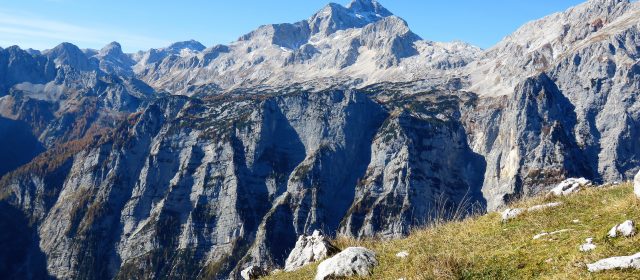
The areas of Gorenjska and northern Primorska connect the SE Alps and the Dinarides and are important in ensuring the connectivity of the Dinaric-SE Alpine lynx population. The planned translocations within the project to this area are especially important for long-term population conservation. As we consider cooperation with local residents to be a crucial part of this process, before the new lynx arrive in the enclosure, the...
Read More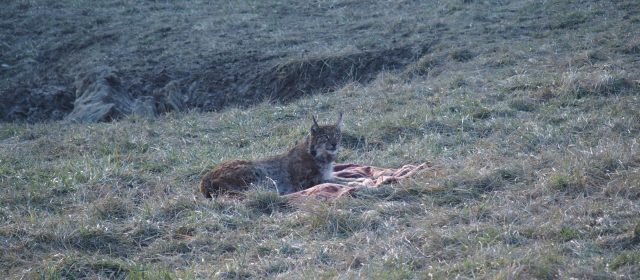
The first three weeks of 2021 were exciting for the Romanian LIFE Lynx team. In addition to checking more than 40 cameras, already placed for lynx monitoring in three study areas, the team started activating the lynx box traps and within a week from activation, two lynxes were captured. The first one was about 5 years old male lynx that was captured on January 22. The lynx was thoroughly examined and all necessary veterinary tests...
Read More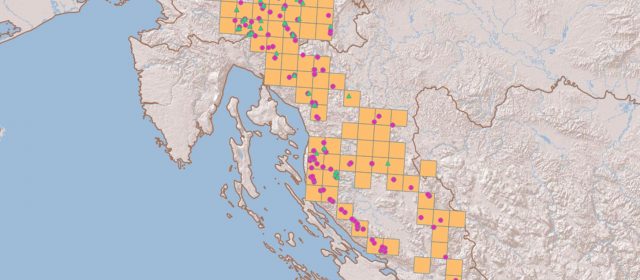
We have prepared the first annual report on the progress of reinforcement process and genetic status of the Dinaric SE-Alpine lynx population in lynx-monitoring year 2019-2020. Importantly, the report includes data collected through other funding schemes, which improved out knowledge about the lynx population. We have surveyed roughly 10.600 km2 with camera traps, which were set up at 348 different locations and identified at least...
Read More
In fall 2020, resident lynx Teja was photographed with two kittens and one of them, a male named Niko, was successfully collared in December 2020. A sample was taken for genetic analysis and we can confirm that translocated lynx Goru is the father of this litter. This means Teja and Goru successfully mated for the second time in a row. Good luck to their precious offspring! ...
Read More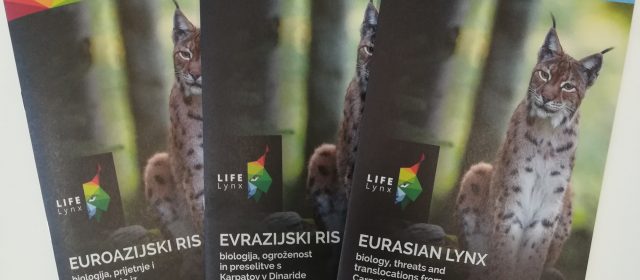
As a small booklet, the brochure “Eurasian lynx – biology, threats and translocations from Carpathians to Dinarides” tells the story of lynx in general and about Carpathian and Dinaric lynx populations. In it you can find something about its past, present, and something about lynxes lives. How can a lynx potentially affect hunting performance in areas where it is present? What is the condition of lynx populations in Romania and...
Read More
Nine schools in Slovenia are cooperating with us within the Young Lynx Guardians programme. But now lynx can be part of lessons in other schools as well. A new handbook for teachers in the upper grades of primary school entitled “Ecology and conservation biology of lynxes” was published. The content of this manual follows the school curriculum and helps teachers explain certain topics on the example of lynx. The manual consists of...
Read More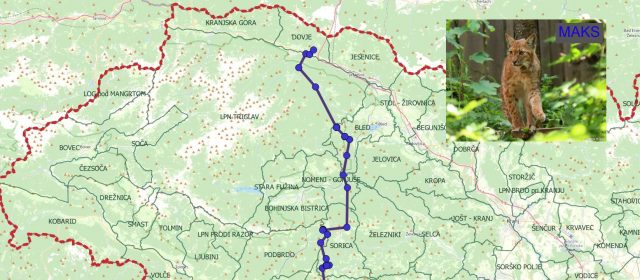
The journey of lynx Maks is more and more interesting every day. Since our last report in the beginning of December, the path took him further north, near the state borders of Slovenia, Austria, and Italy. This news is exciting, but also a little bit worrying, because if he goes further, out of the SE Alpine area, he won’t be able to carry out his mission; to help the Dinaric-SE Alpine lynx population from extincion. Our project team...
Read More
For the reintroduction, reinforcement, and conservation purposes, relevant and systematic research of the lynx population is needed. Reliable data on lynx abundance, trends, genetic diversity, and health status are the basis of such research, that allow us to assess whether the lynx population in an area corresponds with the favourable status for lynx as a species of European importance, and whether it is suitable for capturing and...
Read More