
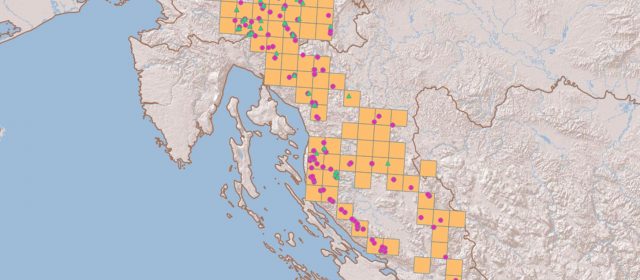
We have prepared the first annual report on the progress of reinforcement process and genetic status of the Dinaric SE-Alpine lynx population in lynx-monitoring year 2019-2020. Importantly, the report includes data collected through other funding schemes, which improved out knowledge about the lynx population. We have surveyed roughly 10.600 km2 with camera traps, which were set up at 348 different locations and identified at least...
Read More
In fall 2020, resident lynx Teja was photographed with two kittens and one of them, a male named Niko, was successfully collared in December 2020. A sample was taken for genetic analysis and we can confirm that translocated lynx Goru is the father of this litter. This means Teja and Goru successfully mated for the second time in a row. Good luck to their precious offspring! ...
Read More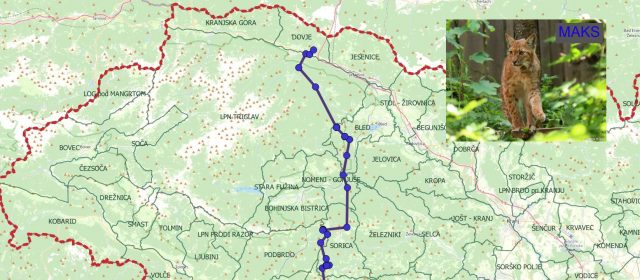
The journey of lynx Maks is more and more interesting every day. Since our last report in the beginning of December, the path took him further north, near the state borders of Slovenia, Austria, and Italy. This news is exciting, but also a little bit worrying, because if he goes further, out of the SE Alpine area, he won’t be able to carry out his mission; to help the Dinaric-SE Alpine lynx population from extincion. Our project team...
Read More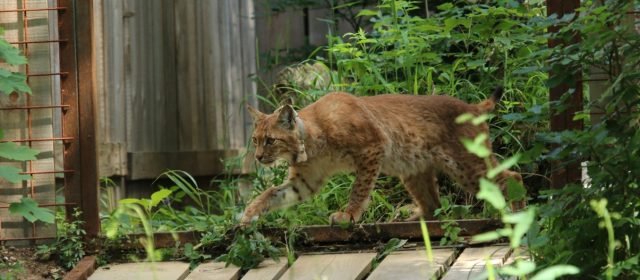
The last lynx that was translocated in 2020 was named after a legendary Slovenian hunter Maks Konečnik. After spending 20 days in a quarantine enclosure in Snežnik, Maks was released into nature at the end of June. We are monitoring his movements with a telemetry collar and for now he still didn’t establish his own territory. After the release he was moving in the Javorniki area on the territory of lynx Doru. After a few months...
Read More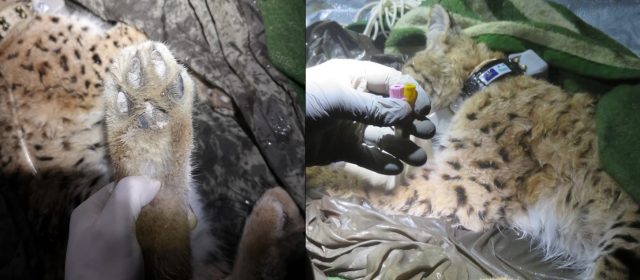
St. Nicholas brought the best present for our project team. On December 6, 2020, colleagues from Department of Biology, Biotechnical Faculty, successfully collared one of the two kittens of Slovenian resident female lynx Teja and (most likely) translocated male lynx Goru. However, we have to wait for genetic analysis to confirm Goru is the father. The male kitten was thoroughly measured and has almost 11 kg, which is about average...
Read More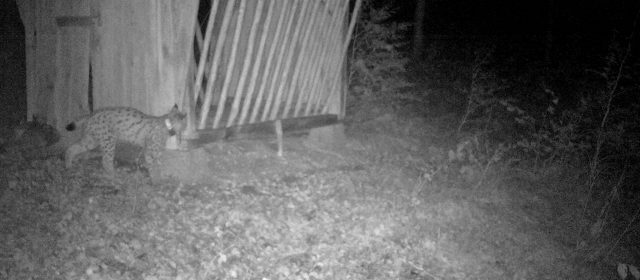
Among all known resident lynx in Slovenia, the story of Mihec is one of the most exceptional ones. He was named more than a decade ago, when researchers captured and collared him as an adolescent lynx. They were following him for a year until his independence. In 2020, the Slovenian LIFE Lynx project team was up for a surprise when they discovered that a lynx they captured was Mihec. The data from his new collar shows us also the size...
Read More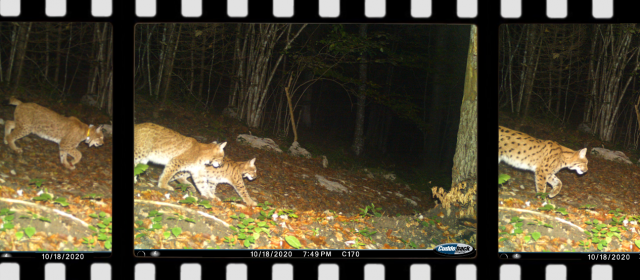
Our photo traps set across Mala Gora hills have photographed lynx Teja with her new offspring. This year she has not one, but two kittens. We do not yet have genetic evidence of the fatherhood, but based on the movement data of Teja and translocated lynx Goru in the mating season it is highly likely that Goru is the father also of this year’s litter. Goru and Teja share their territories for the second year. Their movement data from...
Read More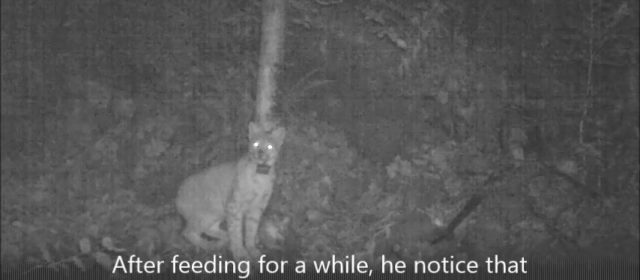
Bears are very effective scavengers, and Eurasian lynx rarely stand a chance when they come to usurp prey remains from them. Let alone, when they are outnumbered one to five as in this case. You can read more about bears’ interactions with lynx in a scientific article by Miha Krofel and Klemen Jerina from Biotechnical Faculty Mind the cat: Conservation management of a protected dominant scavenger indirectly affects an...
Read More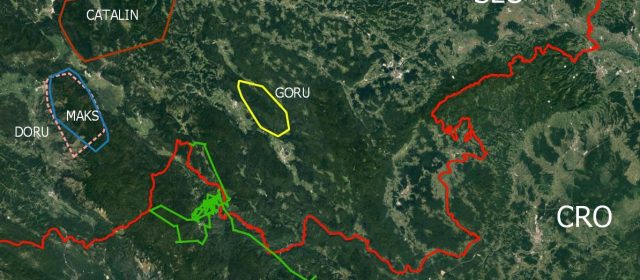
Within the LIFE Lynx project, we translocated a total of seven lynx, all males, to Slovenia and Croatia. Out of five lynxes released this year, at least three have already established their territory. GORU After last year’s release in Loški potok, Goru established his territory in Mala gora area in the Kočevje region. He is still roaming this area today. He shares his territory with resident female lynx Teja, who had...
Read More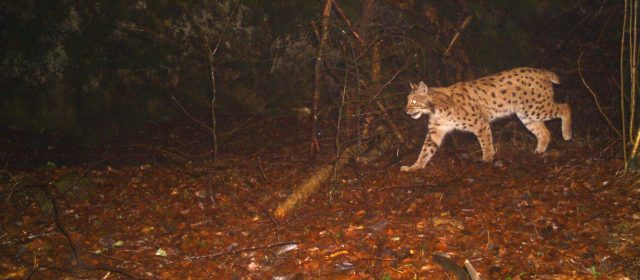
Camera trapping in Slovenia revealed 20 adult lynx and two kittens being present in Slovenia between September 2019 and April 2020. Camera traps are used for systematic data collection on minimal number of adult lynx and the presence of kittens, as well as the sex and age structure of the population to some extent. During the second season of camera trapping, we have collaborated with 68 hunters and successfully obtained high-quality...
Read More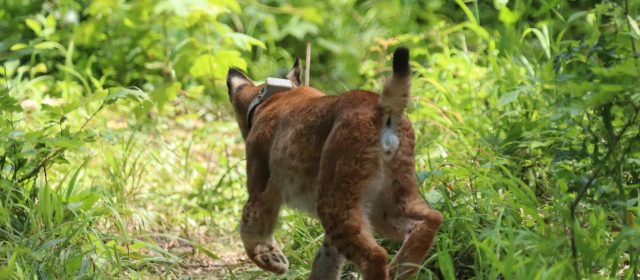
Maks is a young lynx that was released in June this year in Snežnik forests and is currently establishing a territory in the Javorniki area. Since the release, he has managed to catch several roe deers, on the last census of his prey, we found out that this time he caught a fox. The diet of the lynx in the Dinaric Mountains is mostly based on ungulates, especially roe deer, but sometimes they also prey on red deer or chamois. In...
Read More